Aviation Switching Module – NSN 4920-01-250-2696 (AS-IS / Untested): Aerospace Electrical Control Component
Aviation Switching Module – NSN 4920-01-250-2696 (AS-IS / Untested): Aerospace Electrical Control Component
Blog Article
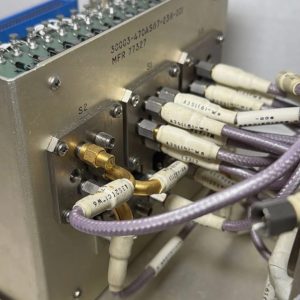
The Aviation Switching Module – NSN 4920-01-250-2696 (AS-IS / Untested) should be purchased with the understanding that no operational, calibration, serviceability, compatibility, or installation guarantee is being made.
An Aircraft Switching Module may control, route, select, isolate, or distribute compatible electrical signals or circuits, while an Aerospace Switching Module should be evaluated according to its exact internal design and intended equipment relationship.
The Aircraft Electrical Switching Module may route selected circuits, while the Aviation Electrical Control Module, Aircraft Power Switching Module, Aerospace Electrical Control Unit, and Aircraft Signal Switching Module terms should not be interpreted as confirmed functions without documentation.
An Aircraft Switching Unit can support specialized signal or circuit management, but an Aerospace Power Distribution Module or Aviation Power Control Module may use different internal architecture and electrical requirements.
Overview of the Aviation Switching Module
NSN 4920-01-250-2696 should be compared with the data plate, manufacturer number, contract markings, serial number, connector layout, and available documentation on the actual unit.
Complete identification increases the value of the Aviation Switching Module for restoration, research, inventory management, or component evaluation.
AS-IS Aerospace Equipment Considerations
Transparent AS-IS terms help specialists evaluate price and risk realistically.
Bench testing should begin only after technical read more documentation, circuit protection, connector identification, and safe power requirements are established.
Aircraft Switching Module Applications
The product page should avoid assigning a cockpit, power-distribution, test-set, or mission-system function without evidence.
Each visible feature should be photographed and described without assuming its electrical purpose.
Inspecting Aerospace Electrical Hardware
The module may have been designed for vibration, transportation, storage, maintenance, or aerospace operating environments, but present performance should not be assumed.
Connectors should be examined for bent pins, pushed-back contacts, corrosion, contamination, cracked inserts, damaged threads, broken keyways, missing caps, and impact marks.
Evaluating Aircraft Electrical Components
An Aircraft Electrical Switching Module should be inspected for overheated areas, burned insulation, damaged terminals, loose hardware, corrosion, moisture entry, broken controls, and signs of previous disassembly.
Seals, labels, inspection marks, tamper indicators, and original component arrangements may have historical or technical value.
Aircraft Electrical Control Applications
An Aviation Electrical Control Module can coordinate or select electrical functions within a compatible aviation or support-equipment system, depending on its documented design.
Control labels and switch legends can provide useful clues, but they should not be used as the only source of technical identification.
Aircraft Power Switching Module Considerations
Current capacity, voltage, duty cycle, contact type, protection requirements, and load characteristics should be confirmed before testing.
A module with unknown electrical condition should remain clearly labeled as untested until formal evaluation occurs.
Electrical Control Unit Restoration
Visual inspection, continuity checks, insulation review, component identification, and controlled testing may form part of a professional evaluation.
A common-looking relay, switch, resistor, connector, or wire may not be an acceptable substitute.
Signal Switching Module Inspection
An Aircraft Signal Switching Module may route low-level, control, communication, measurement, or test signals between compatible equipment channels.
Missing or corroded bonding components may affect noise, interference, or reliability.
Professional Aviation Module Evaluation
Buyers should determine whether they need a direct replacement, restoration item, training aid, or parts source.
A matching NSN or housing does not always confirm identical internal configuration when modifications or supersessions exist.
Commercial Value of an Untested Switching Unit
The unit can provide parts, reference information, display value, training opportunities, or a candidate for professional restoration.
The equipment should remain clearly labeled as untested and unsuitable for operational installation without evaluation.
Aircraft Electrical Distribution Hardware
Professional evaluation helps determine whether the unit serves a power-distribution role or another specialized function.
The original installation orientation should be researched where possible.
Maintaining Legacy Aviation Control Equipment
The inspection should distinguish cosmetic wear from damage that may affect electrical operation or mounting.
Testing results should identify exactly which switches, contacts, indicators, or circuits were evaluated.
Inspecting a Power Control Module
The NSN’s federal supply classification may provide useful context, but the exact role should still be researched through item-specific records.
Warning labels should remain visible and legible.
Understanding an Aircraft Electronic Switching System
Without those references, operational claims should remain limited.
Repair documentation can help distinguish module faults from system faults.
Protecting an Aerospace Switching Unit
Proper storage helps preserve the Aerospace Switching Unit for testing, restoration, or collection.
Original packaging should receive additional protection rather than being used as the only shipping container.
Choosing an Aircraft Electrical Module
An Aircraft Electrical Module should be purchased according to exact identity, intended use, condition, completeness, technical support, testing requirements, and available documentation.
Unknown information should remain clearly identified as unknown.
Evaluating an AS-IS Aircraft Switching Unit
The seller should disclose corrosion, missing parts, broken controls, damaged connectors, previous repairs, opened seals, burned areas, contamination, and signs of impact.
- Confirm that the identification plate shows NSN 4920-01-250-2696 and record every manufacturer number, serial number, contract marking, revision, and modification label.
- Check for burned odors, melted material, arcing marks, water entry, chemical residue, and internal loose components where visible.
- Confirm the written invoice, AS-IS terms, payment protection, packaging method, shipping insurance, inspection period, and return conditions.
Aerospace Module Troubleshooting Process
Testing should begin with identification research, visual inspection, connector mapping, safety review, and examination of available technical documentation.
The test should stop immediately if overheating, smoke, arcing, excessive current, unstable operation, or unusual odor occurs.
Documenting Aviation Electronics Restoration
Original labels, wiring routes, fasteners, finishes, and component locations should be preserved whenever practical.
Photographs can document internal condition before and after work.
Buying NSN 4920-01-250-2696
The Aviation Switching Module – NSN 4920-01-250-2696 (AS-IS / Untested) may suit aviation workshops, military-surplus collectors, aerospace technicians, educational programs, equipment restorers, and specialist parts buyers.
The component should be judged according to complete project suitability rather than clean appearance, military-surplus interest, part-number rarity, or price alone.
Whether the item is purchased for restoration, training, parts recovery, display, testing, inventory, or professional repair, transparent information and controlled handling provide the strongest foundation.
With prompt attention to switches, connectors, wiring, enclosure condition, corrosion, labels, and internal components, the module can preserve its technical and commercial potential.
Report this page